AGU RESEARCH

Columns that reveal the world
- Getting up close and personal with the researchers -

In the world we live in,
From issues close to us to issues that affect all of humanity,
There are many different problems.
The current situation and truth that are surprisingly unknown,
Our proud faculty members offer interesting insights
We will reveal it.

  • College of Science and Engineering, Department of Mechanical Engineering
  • Published on 2026/03/04
  • We will use technology that allows us to freely control heat to support innovation in diverse fields.
  • Professor Koji Fumoto
  • College of Science and Engineering, Department of Mechanical Engineering
  • Published on 2026/03/04
  • We will use technology that allows us to freely control heat to support innovation in diverse fields.
  • Professor Koji Fumoto

The technology to "control heat at will"—the discovery of "super-thermal-conducting heat pipes"

Our lives are surrounded by electronic devices and machines, and one of the biggest common challenges these devices face is heat. Many of us have experienced computers slowing down or suddenly freezing when they overheat. Generally, excessive heat can cause devices to break down or degrade their performance, and the technology to effectively dissipate or manage this heat is called "thermal management."

Currently, this thermal challenge is a bottleneck in technological development. For example, the heat generated in our smartphones, the GPUs in data centers that support AI, and even in electric vehicles (EVs) that are expected to become more widespread, and in space equipment used in extreme environments, increases as performance and density increase. Conventional cooling methods, such as simply using fans to blow air, are no longer sufficient to keep up with the heat. Taking fast charging of EVs as an example, applying high power to shorten charging time causes the battery to heat up, and if it cannot be cooled, the battery will be damaged. That is why new thermal control technologies that can rapidly cool batteries are essential, and our lives will not become any more convenient until this problem is solved.

My research deals with this technology of "controlling heat at will." My work mainly involves developing devices to dissipate heat, and I am particularly focused on the invention of the "super thermal conductivity heat pipe" that I discovered two years ago. This pipe boasts world-class performance, being able to carry more than 500 times more heat than conventional copper pipes, which are representative of materials that conduct heat well. By embedding this aluminum pipe in a device, heat can be dissipated efficiently.

This ultra-high thermal conductivity heat pipe has only recently been discovered, but it has already attracted considerable interest from companies. We have pursued miniaturization to a thickness of less than 1 millimeter, and it will likely be possible to incorporate it into our smartphones in the future. We have also created larger versions, some reaching lengths of 1 meter. We are confident that this technology will be key to rapidly advancing technological innovation in various fields that have been stalled by heat.

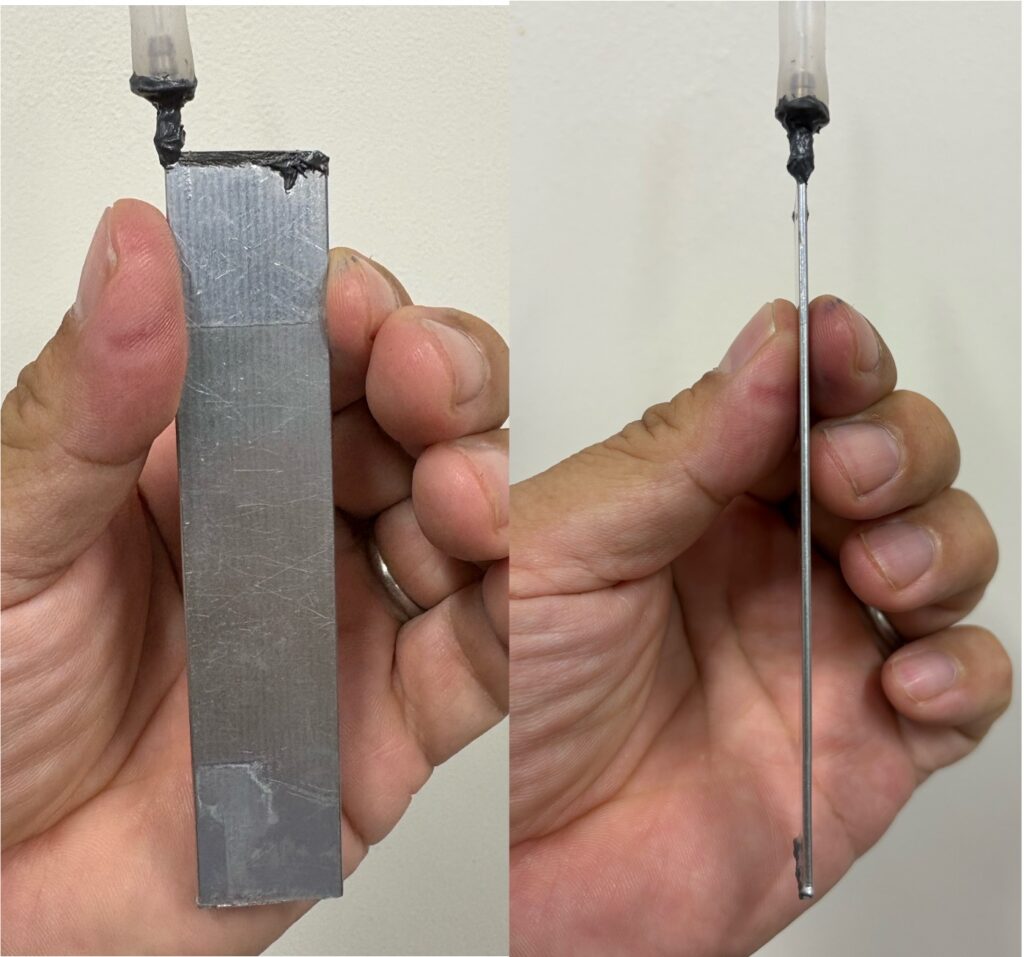
Newly developed thin micro heat pipe

World-class performance born from failure and perseverance

My journey to discovering the world's highest performance was by no means smooth sailing. Rather, it was born from a series of painstaking, painstaking experiments, and a certain degree of luck on my side.

Actually, I had found a hint for super-thermal-conducting heat pipes about 15 years ago, when I had just started my research at a Canadian university. At the time, I was excited, thinking, "I've done something amazing!" However, the professors and doctoral students around me told me, "That's impossible. It's data that came about due to a mistake in the experimental method, and you should refrain from publishing it," so it was shelved. The data was a departure from common sense in terms of how heat is transferred.

This discovery was made due to a mistake during the experiment. While heat pipes are typically filled with liquid, the conventional theory is to use half the amount (50%). Everyone followed this rule, but I happened to miscalculate and used only 5% (1/10th) of the required 50%. As a result, I achieved an astonishing heat transfer result: the temperature of the heated and unheated parts became "almost the same." Normally, heat is like the handle of a frying pan; the unheated part remains cool, and the transferred heat gradually cools down. However, with my heat pipe, when heated to 100 degrees, the unheated part reached 99 degrees, demonstrating that all the heat was transferred.

However, deep down, I always held onto the belief that "that wasn't just a failure." Then, about two years ago, when the research environment was finally set up, I decided to try again with the students in my university lab, and we were able to reproduce the amazing phenomenon we had seen before. I still remember the excitement I felt at that moment; it was a joy that gave me goosebumps.

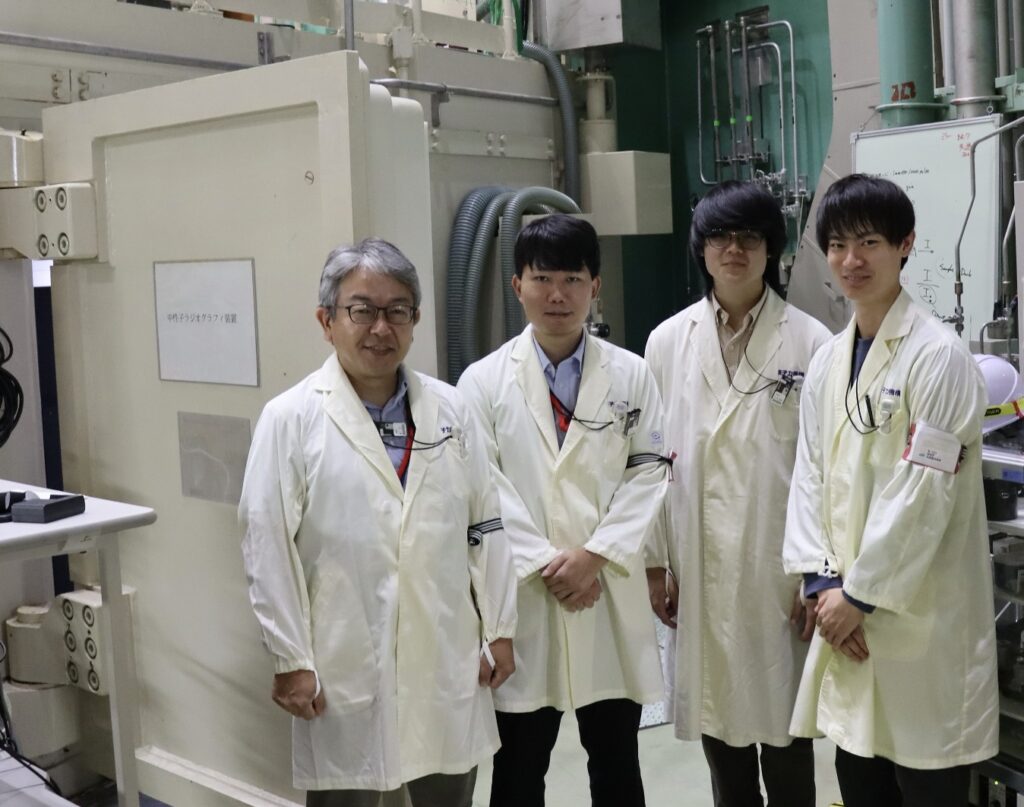
My research doesn't just aim for higher performance; it prioritizes understanding the mechanisms behind it—"why it happens" and "why it improves." Even if I discover the world's best performance, if I don't understand the mechanism, it won't be a valid paper for a researcher. I continue to conduct painstaking basic research, such as going to nuclear facilities with my students and irradiating aluminum pipes with neutrons emitted from the reactor to visualize the movement of water, similar to an X-ray.

A scene from a visualization test at the Japan Atomic Energy Research Institute (Ibaraki).

This super-thermal-conducting heat pipe is expected to have applications in thermal control in space in the future. Its characteristic of maintaining consistent performance regardless of orientation (horizontal or vertical) is extremely advantageous in the gravity-free environment of space. In 2026, research institutions in the United States and Italy plan to further deepen their research on this heat pipe and disseminate information about the research worldwide.

Utilizing heat for "treatment"—Biothermal engineering: Fighting cancer through medical-engineering collaboration

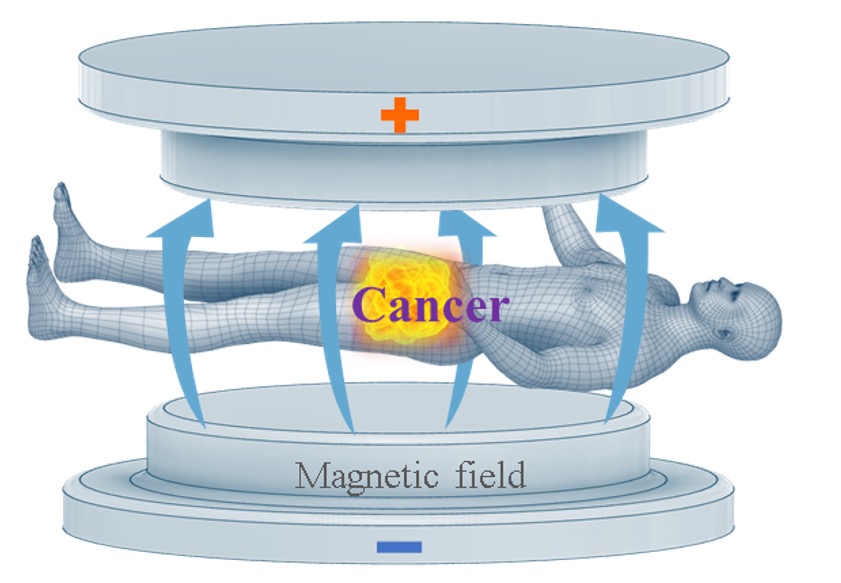
Another major pillar of my research is "biothermal engineering," which applies engineering knowledge to the medical field. When we talk about thermal control, we mainly focus on cooling equipment, but the technology to "store" heat (heat storage) is also important, and in medicine, the technology to "add" heat is also required. I have wanted to apply engineering to medicine ever since I obtained my PhD in engineering, and I previously collaborated with doctors to research therapeutic hypothermia, a method of cooling the brains of patients with cerebral hemorrhage. And now, I am particularly focusing on the application of "magnetic hyperthermia" (a treatment that heats tumors from outside the body with a high-frequency magnetic field) to cancer treatment.

It is known that cancer cells are vulnerable to heat of around 42 to 43 degrees Celsius. We are researching a method to use this property to precisely heat and kill only cancer cells. Conventional heaters cannot heat only cancer cells within the body. Therefore, we ask doctors to use their expertise to accumulate microscopic nanoparticles at the cancer cells. This is where we come in.

This research utilizes a mechanism where a powerful magnetic field, which reverses its north and south poles hundreds of thousands of times per second, is applied to these nanoparticles, generating heat from them. By precisely controlling this heat generation, we aim to selectively warm only cancer cells without damaging surrounding healthy cells. From an engineering perspective, we are researching how to deliver heat to cancer cells most effectively, and we are actively participating in and collaborating with physicians at forums such as the Hyperthermia Society.

Illustrative diagram of magnetic hyperthermia

Heat pipes are also now being applied to medical devices. Ultrasound scanners used to examine cancer and babies, as well as the tips of endoscopes, all contain components that generate heat, and if this heat is not dissipated, it can lead to malfunctions or performance degradation. My laboratory is receiving numerous inquiries from companies about the potential of these applications. By helping to solve individual problems, such as how to create heat dissipation devices for uniquely shaped components like the tips of endoscopes, I am realizing that engineering has immense potential to contribute to human health and benefit society.

Let's find the "questions" that lie beneath the "obvious."

From a young age, I loved taking things apart. I remember being constantly scolded by my parents for taking apart things like radios and televisions at home, driven by a strong curiosity about what was happening inside the objects in front of me, things I couldn't see. This inquisitive spirit eventually led me to want to study heat, another invisible energy flow, and I think that's what led me to go to a university research lab.

My mentor always told me, "That's interesting," about my research. I hope that those who aspire to become researchers will pursue their own interests and find their own unique "questions" that others will find interesting and relatable. As you continue your exploration, your view of the world will change. Research is a series of mundane and gritty tasks, but by steadily accumulating hits rather than aiming for a home run, you will surely discover something.

The most important thing in research is the ability to "find questions." Unlike high school, university is not a place to learn answers, but a place to find questions. Even the cars and smartphones we see every day, if you take a step deeper, reveal a series of fascinating questions such as, "Why does it work this way?" and "What kind of mechanisms and problems are there?" I always ask my students "why" and "how." This is because I want them to find the essence hidden beneath the surface, the essence that no one has noticed, not just the visible results. Pursuing these questions is a valuable experience that can only be gained by carefully engaging with them at university.

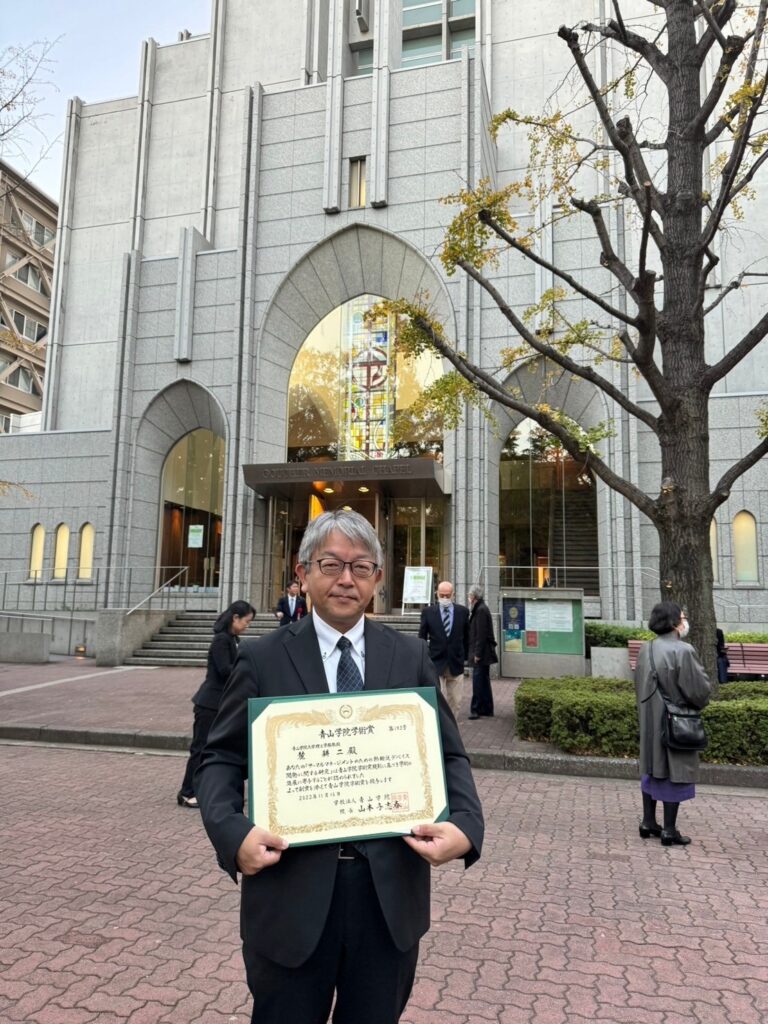
Aoyama Academic Award, received in 2023

Related articles

  • K. Fumoto, K. Okubo, S. Oshima, A. Hatamoto, K. Kurita, I. Harayama and H. Iikura, 2025 “Experimental visualization of liquid slug dynamics in a meander-shaped low-fill heat pipe using neutron radiography”, Journal of Visualization, 29.
  • Koji Fumoto, 2025, "Special Feature: Thermal and Fluid Technologies to Meet Diverse Customer Needs / Next-Generation Thermal Management Technologies to Pave the Way for the Future of Mobility," Automotive Technology, 79, 18-24.
  • Shunsuke Tsutsumiuchi, Keiko Ishii, and Koji Fumoto, 2024, "Basic Study on the Heat Transport Performance of Low-Fill-Ratio Self-Excited Oscillating Heat Pipes (Influence of Installation Position on Heat Transport Performance)," Transactions of the Japan Society of Mechanical Engineers, 90(930).
  • Koji Fumoto et al., 2021, "Evolution and New Developments in Thermal Transport and Cooling Technologies Supporting Miniaturized and Concentrated Electronic Devices," Science & Technology Co., Ltd.

Study this topic at Aoyama Gakuin University

College of Science and Engineering, Department of Mechanical Engineering

  • College of Science and Engineering, Department of Mechanical Engineering
  • Professor Koji Fumoto
Link to researcher information

Related Keywords

Related Keywords

Related Content

  • Faculty of Business Administration, Department of Marketing
  • Posted on 2024/05/17
  • Unraveling the mechanisms of the distribution system that intertwines economy, society, culture, and history
  • Professor Nobukazu Azuma
  • "Distribution" is a huge social system that connects production and consumption. Professor Nobukazu Azuma has been shedding light on the factors that lead to the creation of distinctive distribution structures in each country and region, taking into account the background of culture, history, society, and economy. In order to unravel the mechanisms of distribution, which are woven together with diverse and complex elements, it is important to find a method that is appropriate for the research subject. For this reason, he is also working on research methods unique to social sciences. Currently, as the representative of a joint research project involving multiple universities in Japan and the UK, he is focusing on a series of research to examine leading theories and hypotheses related to the ocean of distribution as a whole and each part, and to verify them in light of actual distribution phenomena.

  • Faculty of Science and Engineering
  • Changing the world! That's the joy of science
  • Professor Miki Hasegawa
  • "Basic research" is not research that aims to produce something immediately useful, but rather research that unravels all kinds of phenomena on Earth and allows us to gain new understanding and proof. However, this research has the potential to dramatically change people's lives and solve problems facing society in the future. In this column, we explain what "basic research" is and talk about its appeal. (Published in 2014)

  • Faculty of Science and Engineering
  • Using a laser
    Unraveling the "Molecular World"
  • Professor Tadashi Suzuki
  • Although the atoms and molecules that make up matter cannot be seen directly with the naked eye, it is possible to shine light on molecules and observe the "molecular world" from their response. While reactions that occur in response to light contribute to maintaining life and maintaining health, it has become clear that they can also be the cause of disease. Another theme of physical chemistry research is the development of analytical methods to capture molecular reactions. See what applications can be achieved by observing the molecular world and unraveling its complex and dynamic mechanisms. (Published in 2021)

Related Content

  • Faculty of Science and Engineering Department of Chemistry and Life Sciences
  • Challenging the unknown
    Adaptation strategies for high water pressure environments learned from yeast
  • Professor Fumiyoshi Abe

  • Faculty of Economics
  • Predicting population distribution for the next few decades by block and district
    Urban planning and disaster prevention planning
    Providing the underlying data
  • Professor Takashi Inoue

  • Faculty of Business Administration, Department of Business Administration
  • Turning expertise into social benefit.
    Exploring data science to create more value
  • Associate Professor Ibuki Hoshina