AGU RESEARCH

Columns that reveal the world
- Getting up close and personal with the researchers -

In the world we live in,
From issues close to us to issues that affect all of humanity,
There are many different problems.
The current situation and truth that are surprisingly unknown,
Our proud faculty members offer interesting insights
We will reveal it.

  • Faculty of Social Informatics, Department of Social Informatics
  • Published on 2025/05/16
  • Combining insights from sociology and information science, we tackle complex social problems.
  • Associate Professor Shinya Obayashi
  • Faculty of Social Informatics, Department of Social Informatics
  • Published on 2025/05/16
  • Combining insights from sociology and information science, we tackle complex social problems.
  • Associate Professor Shinya Obayashi

Unraveling "social dilemmas" using computational social science methods.

Since my student days, I have consistently researched the theme of "social dilemmas." A social dilemma refers to the phenomenon where the more rational choices people make (i.e., choices that are convenient for themselves), the more undesirable the resulting state of society becomes. Humans inherently tend to make rational choices, which easily creates an incentive to "free-ride" on the efforts of others without bearing the cost of cooperation. For example, a clear example in environmental issues is energy conservation. What is desirable for society is for everyone to slightly raise the temperature setting of their air conditioners in order to reduce electricity consumption in the summer. However, for individuals, this compromises the comfort of their rooms, so the psychology of "free-riding on the cooperation of others without bearing the cost" comes into play. In other words, while some people are willing to cooperate in considering energy consumption and environmental issues, others choose to keep their air conditioner settings low and stay in a comfortable room. If everyone falls into this mindset, no one will conserve energy, leading to a vicious cycle where electricity consumption becomes strained and CO2 emissions increase. This series of negative chains is a classic example of a social dilemma. This phenomenon is deeply connected to various social problems, from a shortage of volunteers to the depletion of natural resources. While investigating and observing such cases, we are studying the mechanisms that encourage cooperative behavior among people from the perspective of "computational social science."

Computational social science is a field of study that combines computational technology with social science to logically explain human behavior and social phenomena through the analysis and modeling of big data. In this field, knowledge from social sciences such as political science and economics is utilized in addition to information technology.

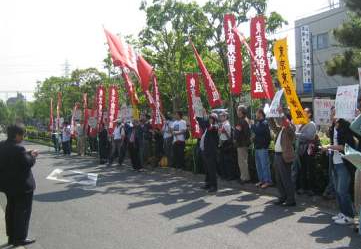
My first project as a student was modeling mutual aid in labor unions. In the field of labor sociology, a successful example of a certain community union* was well known, but there had been little attempt to theoretically explain why mutual assistance among union members worked so well. So, I decided to re-examine it from the perspective of social dilemmas, rather than from the perspective of conventional labor research. Community unions have a high turnover of members and consist of very fluid social relationships. The fact that cooperative behavior continues even within such a system is theoretically very interesting and a phenomenon that is difficult to explain with general theories of cooperation. In reinterpreting these phenomena from the perspectives of sociology and economics, I realized that there are many mysteries and unexplained structures in society.

*A community-based labor union. Anyone can join, from temporary workers to foreign workers.

Labor union survey (Professor Obayashi is on the far right)

Recently, we've been focusing on a service offered by a certain mobile phone company that allows users to share data packets (data capacity). This service pools unused data packets among subscribers and replenishes them when data capacity is insufficient. If each individual were to try to "get the best deal," everyone would subscribe to slightly less data and try to draw from the pooled packets to make up the difference, which should cause the service to fail. However, in reality, users are "sharing" data packets with each other, and the service is running smoothly. In other words, it's a case of "shared resources" in economic terms working effectively. So, why is this a success story? By analyzing the subscribers' behavioral data, we found that some people perceive it as "a system where you can get other people's unused data packets," while others see it as "a place for mutual assistance," "a place to practice altruistic behavior," and "a piggy bank where you can save leftover data capacity." It became clear that the service is built on the intersection of diverse values, and is supported by people with various perspectives. We fed the insights gained back to the company in question, and they used them to improve the service. My research activities also involve logically unraveling people's behavior by utilizing not only sociological insights but also computational techniques and big data.

Research that transcends disciplinary boundaries approaches problems that could not be solved before.

While it may be unusual in the field of sociology, I incorporate "game theory," a method from economics, into my research. Game theory is a theory that uses mathematical models to analyze what rational actions each player (decision-maker) should choose to maximize their own gain in situations where multiple players influence each other.

During my graduate studies, I had the opportunity to present at a game theory workshop. Initially, the participants seemed surprised, wondering, "What will a sociology graduate student present on?" However, the presentation was well-received. This was because they appreciated that I modeled game theory, which in economics often deals with mathematical and abstract models, using a sociological approach with realistic examples. When constructing the model, I referenced the theory of "overlapping generations repeated games" proposed by Professor Michihiro Kandori, a renowned economist and special professor at the University of Tokyo. After the workshop presentation, Professor Kandori contacted me, which led to a collaborative research project. I feel that this experience was a major turning point in my research career.

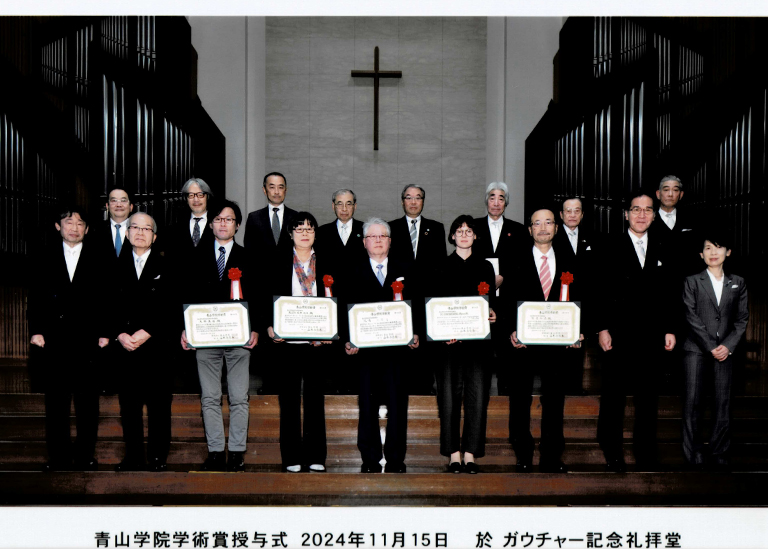
Aoyama Academic Award Recipient

In my research, I always make it a point to actively interact with researchers from other fields. The social dilemmas I study occur in all aspects of daily life, from politics to economics and the environment, so research is being conducted in a wide range of academic fields, including psychology, economics, and evolutionary biology. Against this backdrop, by participating in academic conferences in psychology and economics, I have been able to combine our respective knowledge and approach problems that were previously unsolvable.

Cultivate the ability to question what is "taken for granted" in everyday life and to consider things from multiple perspectives.

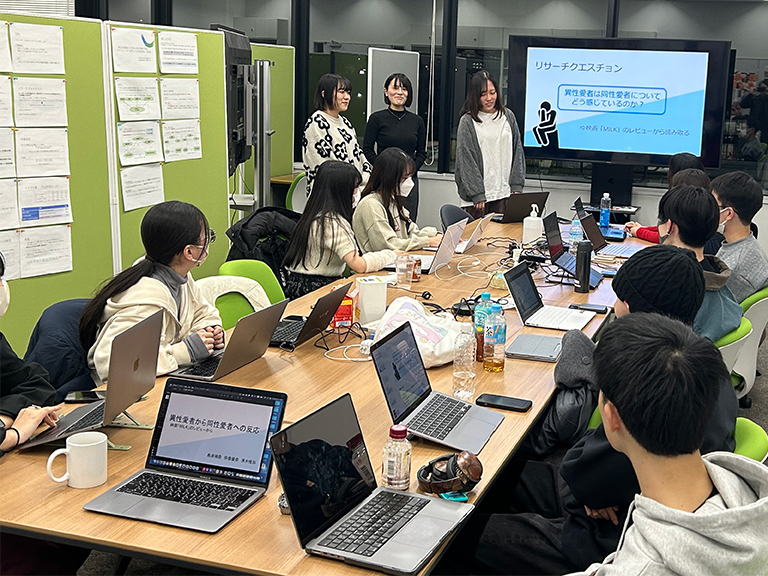
The problems facing modern society are extremely complex, and solving them requires knowledge, skills, and a balance that combines insights from multiple fields. In guiding students in my seminars, I emphasize a problem-solving approach that involves "discovering themes to be solved (research questions) and learning the knowledge and skills necessary to solve them." In my seminars, students first acquire a solid foundation in sociological theory and research methods in the first semester, then practice programming and data analysis in the second semester, and finally utilize the knowledge and skills they have gained to conduct research.

School of Social Informatics is characterized by a mix of humanities students, who tend to be driven by problem awareness, and science students, who tend to prioritize technology. However, it's important to maintain a balance without leaning too heavily towards one side or the other. First, you identify problems by utilizing sociological theories, and then you collect and analyze the necessary data. The real joy of research lies in proceeding through this process of trial and error.

Seminar様子

I hope that high school students will develop the habit of thinking critically. Sociology is the study of the intricate mechanisms of the world. By not taking everyday life for granted and by examining a single phenomenon from multiple perspectives, you will surely encounter new questions and discoveries. The various problems that exist in the real world naturally arise regardless of the boundaries of existing academic fields. That is why solving them requires an approach that integrates knowledge and technology across disciplines. Don't be confined to the framework of humanities or sciences; actively challenge yourself in a wide range of fields.

Related articles

  • Kandori Michihiro and Obayashi Shinya, 2014, “Labor Union Members Play an OLG Repeated Game,” Proceedings of the National Academy of Science, 111(supplement3): 10802-9.
  • Shinya Obayashi, Misato Inaba, Tetsushi Ohdaira, and Toko Kiyonari, 2022, "How do people interpret real-world social dilemmas? An exploratory analysis of frames using text mining," *Theory and Method*, 37(2): 156-69.
  • Hiroki Takikawa, Tsunematsu Jun, Sakamoto Takuto, and Obayashi Shinya (translators), 2019, *Bit by Bit: An Introduction to Digital Social Surveys*, Yuhikaku (Salganik, M. 2018, *Bit by Bit*, Princeton University Press).
  • Hiroki Takikawa, 2018, "The Current State and Challenges of Computational Social Science from the Perspective of its Relationship with Sociology," *Theory and Method*, 33(1): 132-48.
  • Michio Umino, 2021, *Social Dilemmas*, Minerva Shobo.

Study this topic at Aoyama Gakuin University

Faculty of Social Informatics, Department of Social Informatics

  • Faculty of Social Informatics, Department of Social Informatics
  • Associate Professor Shinya Obayashi
Link to researcher information

Related Keywords

Related Content

  • Faculty of Science and Engineering
  • Sensor Technology and Possibilities
  • Professor Yoshito Tobe
  • A "sensor" is a device that converts the magnitude of force, distance, brightness, and other factors into signals and data and outputs them. With the spread of smartphones, the technology for these sensors has rapidly developed, making it possible to measure things that were previously impossible to measure. In this column, we explain how sensors are used and the role they play, introduce research examples, and consider the future possibilities of sensor research. (Published in 2016)

  • Faculty of Social Informatics, Department of Social Informatics
  • Unraveling the mechanisms of people's financial behavior and stabilizing financial markets
  • Professor Hirotaka Fushiya
  • In financial markets, mimicking and following the buying and selling of others is sometimes common. This can cause stock prices to fluctuate significantly beyond the appropriate range, destabilizing the market. Professor Fushiya Hirotaka considers financial market movements as being divided into long-term trends and short-term uncertainties, and continues his research to keep the uncertainty caused by following-up behavior within an appropriate range, thereby contributing to the stabilization of financial markets. Stochastic differential equations are used for this purpose. They are expected to be applied not only to finance, but also to predicting trends in various social and natural phenomena. (Published in 2023)

  • School of Business, Department of Business Administration
  • Turning expertise into social benefit.
    Exploring data science to create more value
  • Associate Professor Ibuki Hoshina
  • Statistical modeling is a method of deriving mathematical models from data that represent the structures behind the data, which can be used to predict and interpret various phenomena. Associate Professor Hoshina is working to develop new methods that apply existing theories, aiming to create models with higher prediction accuracy and versatility. By taking advantage of the strengths of theoretical research and introducing methods to society that allow for error-free data analysis even without specialized knowledge, he looks toward a future in which anyone can make the most of the benefits that data science offers. (Published in 2023)

Related Content

  • College of Education, Psychology and Human Studies, Department of Psychology
  • Focusing on the reactions of the brain and body, we capture the "emotions" that are not expressed in words and actions.
  • Associate Professor Izumi Matsuda

  • School of Business, Department of Business Administration
  • Present accurate and objective information to encourage appropriate decision-making throughout society
  • Professor Masuo Araki

  • Faculty of Science and Engineering
  • Using a laser
    Unraveling the "Molecular World"
  • Professor Tadashi Suzuki